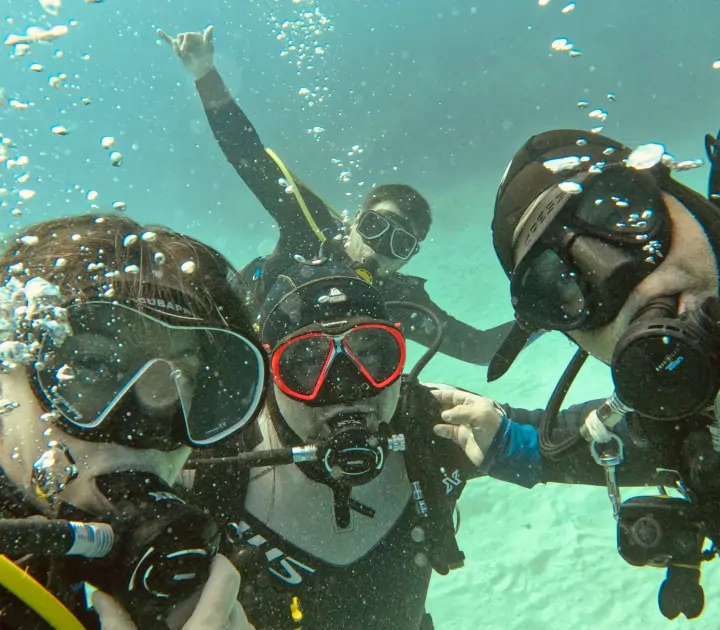
After 30 years underwater, one of the questions we hear most is: when’s the best time to dive in Playa del Carmen? Short answer: you can dive here year-round. The answer that actually helps you plan, though, is different — it depends on what you want to see. The Mexican Caribbean isn’t a fixed backdrop; it’s a living ecosystem that shifts with the seasons, and each month brings its own show.
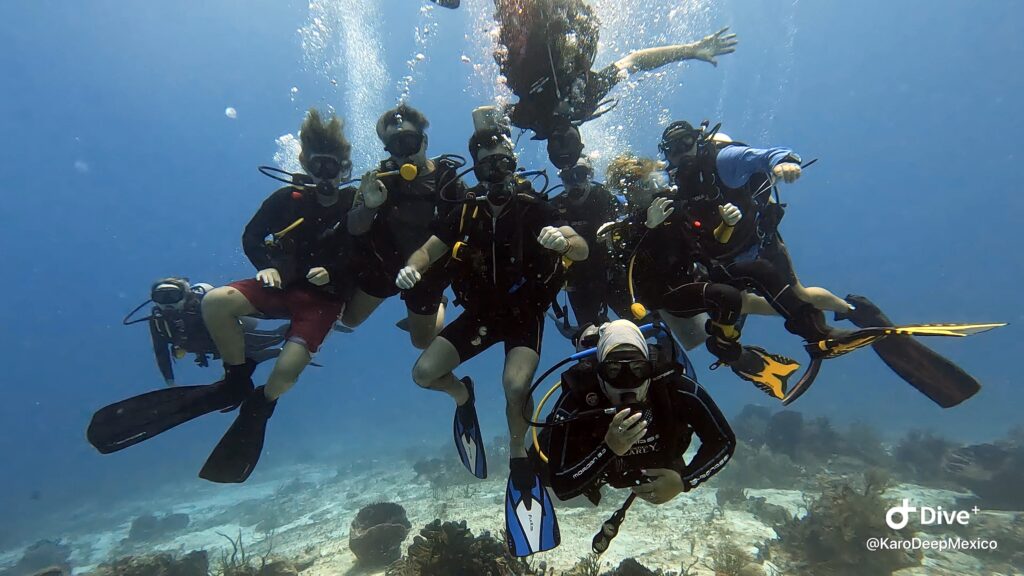
Quick Month-by-Month Calendar
| Months | What to See | Water Temp |
|---|---|---|
| November – March | Bull sharks | 24–26°C |
| January – February | Spotted eagle rays | 24–25°C |
| May – September | Sea turtle nesting | 28–29°C |
| June – mid-September | Whale sharks (snorkel) | 28–29°C |
| Year-round | Cenotes and Cozumel | 24°C (cenotes, constant) |
Winter (November to March): Thrills and Marine Giants
If you’re after adrenaline, winter wins, no contest. The water cools slightly —24 to 26°C, so we recommend a 3mm or 5mm full wetsuit— but what you’ll see more than makes up for it.
Bull sharks: the main event. Between November and March, pregnant females visit the coast off Playa del Carmen. It’s a static, slightly deeper dive, so we recommend Advanced certification or solid buoyancy control.
Spotted eagle rays: specifically in January and February, full squadrons “fly” against the current on Cozumel’s reefs and some deeper spots in Playa.
Spring and Summer (May to September): Warm Water and Whale Sharks
Once temperatures climb on land, the sea turns into a warm, clear soup —28 to 29°C. A shorty or rash guard is all you need, and visibility tends to be excellent.
Sea turtles: May through September is nesting season. Underwater, it’s nearly guaranteed you’ll run into green turtles and loggerheads resting in reef crevices.
Whale sharks: from June to mid-September, the world’s largest fish gathers north of the peninsula, near Isla Mujeres and Holbox, to feed on plankton. Technically this is a snorkel tour, not scuba —that’s federal regulation, not our choice— but it’s a full-day trip that’s worth every minute.
What Doesn’t Depend on the Calendar
A couple of the Mexican Caribbean’s best experiences work fine regardless of month.
Cenotes: a constant 24°C year-round, no wind or swell to worry about, and visibility past 60 meters thanks to limestone-filtered water. When a “norte” (strong wind) shuts down ocean diving, the cenotes stay open and perfect.
Cozumel: known for its walls and drift diving, spectacular in any season. The current is always there, feeding the coral. Crossing from Playa del Carmen is simple and puts you on reefs like Palancar and Santa Rosa.
Why Who You Dive With Matters More Than the Season
You can show up the best week of the year, but if you end up on a crowded boat with inexperienced guides, the season won’t save the experience. That’s why, no matter the month, we keep things the same: small groups, guides with 30+ years reading real-time conditions, and honesty — if the weather rules out bull sharks or Cozumel, we’ll tell you and offer something better, like an incredible cenote, instead of forcing a bad day.
Frequently Asked Questions
What’s the best time to dive in Playa del Carmen?
The best time to dive in Playa del Carmen depends on what you want to see: winter (Nov–Mar) for bull sharks and eagle rays, summer (Jun–Sep) for whale sharks and turtles. Cenotes and Cozumel are great year-round.
When is bull shark season?
November through March, with peak activity in the core winter months.
Can I dive cenotes any time of year?
Yes. Water stays a constant 24°C year-round and doesn’t depend on outside weather.
Now you know the best time to dive in Playa del Carmen for what you want to see. Ready to plan your trip? Tell us which month you’re coming and we’ll build the right itinerary for that season. Write to booking@deepmexico.com or contact Deep México on WhatsApp.
Need help choosing the right dive outing?
Message us and we will help you compare options, logistics and budget based on your level and your trip.