The Devil’s Throat dive in Cozumel is one of the most sought-after dives for certified divers who already have some experience under their belt and want something beyond a flat, calm reef — think stone tunnels, natural chimneys, and a wall that drops off into deep blue nothing. I’ve been diving the Mexican Caribbean for 33 years now, and this site remains, for me, one of the most technical and satisfying dives Cozumel has to offer.
How deep is the Devil’s Throat dive in Cozumel?
Palancar’s Devil’s Throat sits within the Punta Sur area, part of the larger Palancar reef system, and bottoms out around 40 meters at its deepest point — right where the site’s signature tunnels form. Given the depth and the currents typical of this stretch of reef, we recommend Advanced Open Water certification or equivalent experience before attempting it.
What exactly is the Devil’s Throat?
It’s a network of tunnels and chimneys that cut straight through the reef wall at Cozumel’s southern tip, near the Palancar and Colombia formations. You swim in through one opening, cross a passage carved into solid rock, and emerge on the other side — usually several meters deeper than where you started. This isn’t a beginner site: the depth, the current, and the precise buoyancy control required inside enclosed spaces make it a dive we reserve for divers with real experience, not just a certification card in their logbook. It’s the same kind of diver who also enjoys exploring cenote routes for certified divers in Playa del Carmen. Every time I drop down there, even after all these years, I still feel that moment of total concentration right before entering the first tunnel.
Why the Devil’s Throat dive is considered technical
We call it technical not because it requires specialized tech-diving gear or gas blends, but because it demands absolute buoyancy control, sharp current management, and quick decision-making in spaces with limited visibility. Inside the tunnels, there’s no room for sloppy fin kicks — any careless movement stirs up sediment and ruins visibility for the entire group. The Devil’s Throat dive also means managing depth and bottom time more carefully than you would on a shallow reef, since you’re operating close to recreational limits. It’s the kind of demanding profile that draws the same divers who seek out advanced wreck diving in the Mexican Caribbean. That’s why we always assess each diver’s comfort level with depth and their recent diving experience before confirming this as the day’s dive site.
The tunnels and chimneys that shape the site
What makes this site truly unique is the natural architecture of the reef itself: coral rock passages formed over thousands of years, some wide enough for two divers to swim side by side, others so narrow you can only pass through single file. Light filters down in shafts from above, creating an almost theatrical effect as you move from one chamber to the next. When you exit the final tunnel, the wall keeps falling away into deeper water, and that contrast between the tight, enclosed passage and the open blue vastness is exactly why experienced divers remember this dive years later, down to the smallest detail.
The marine life you’ll find at the Devil’s Throat
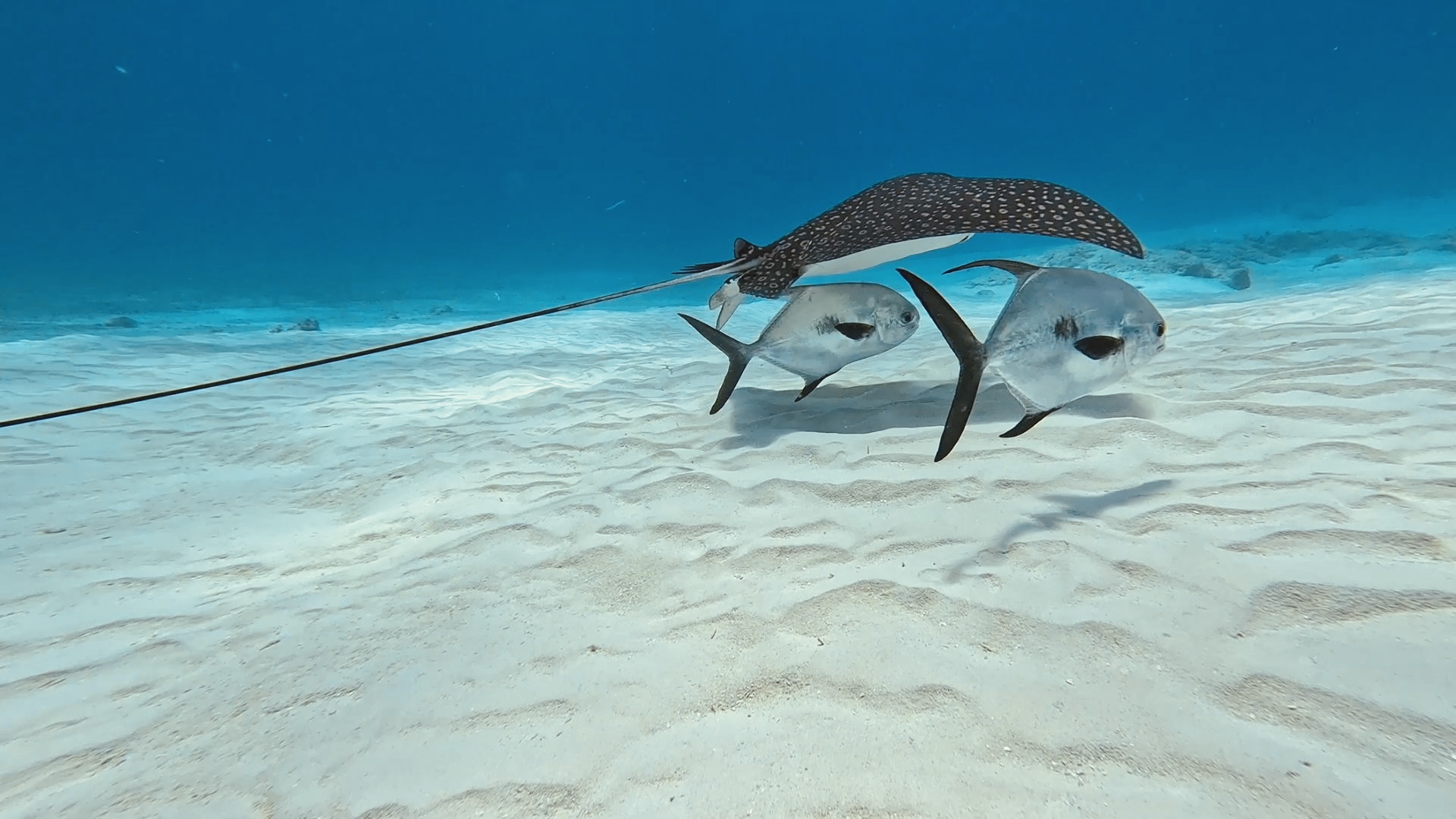
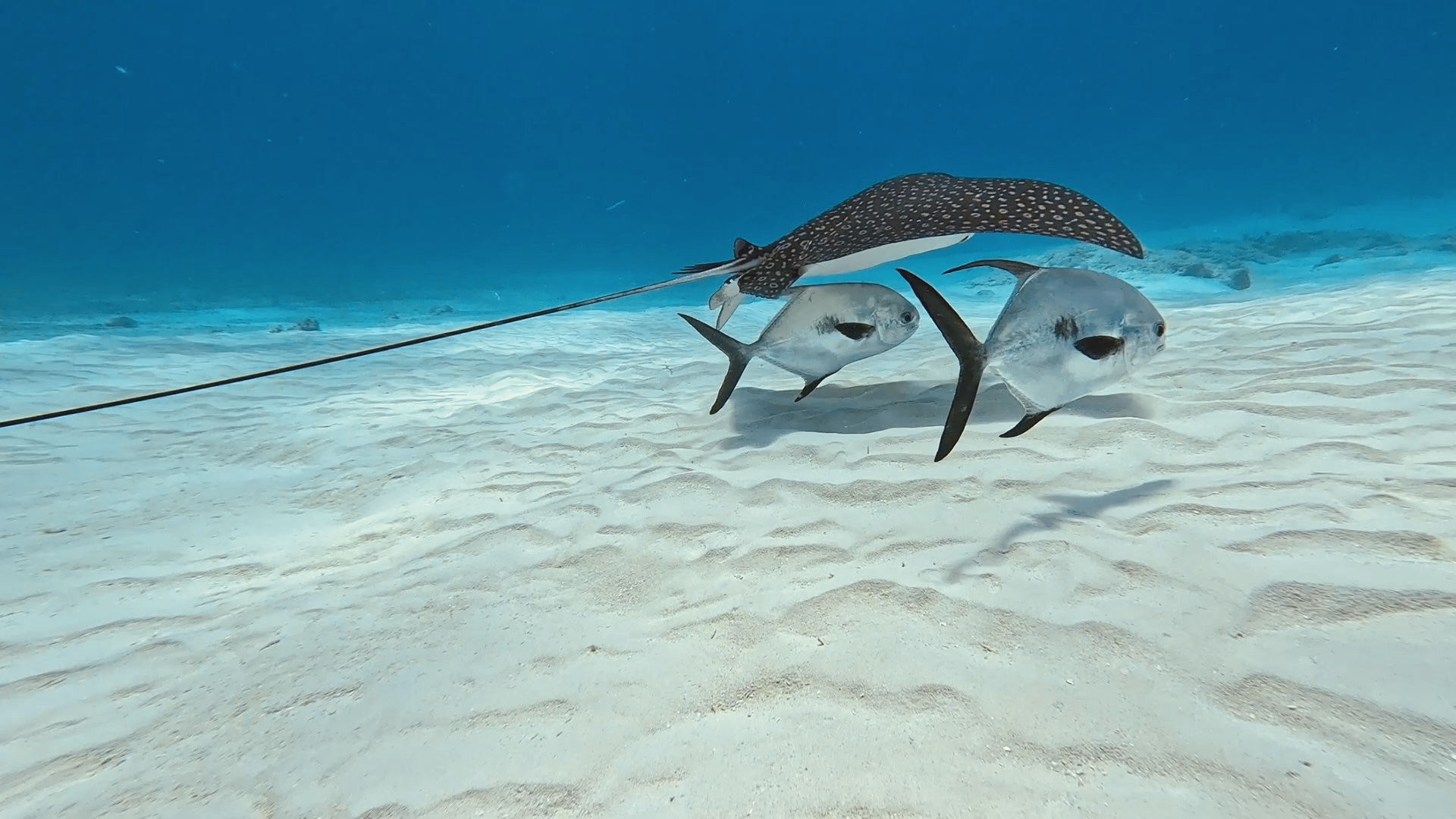
While the main draw here is the geology, marine life fills out the entire dive. It’s common to spot large groupers resting at the tunnel entrances, moray eels peeking out from cracks in the rock, and along the outer wall, schools of jacks or snappers moving with the current. Eagle rays occasionally cruise through open water, especially during the months with the best visibility. Reef health throughout this Punta Sur area is excellent, thanks to decades of protection as a marine park — and it shows in the vivid color and density of coral surrounding the tunnels.
Current conditions and what to expect underwater
Currents in this part of Cozumel can range from moderate to strong, and they tend to pick up right at the tunnel entry and exit points. Our guide reads the conditions before deciding the exact dive entry point, and keeps a constant headcount throughout the swim-through to keep everyone together inside the passages. Conditions also shift with the calendar, which is worth checking against our seasonal guide to diving the Riviera Maya before booking your trip. This isn’t a dive where you fight the current — it’s about reading it, letting it work for you, and staying calm when the space momentarily closes in around you. Exiting that last tunnel into open water, with the current gently pushing you forward, is one of those moments that explains why this site stays etched in the memory of anyone who’s dived it.
Small groups: why we limit to 4 divers per guide
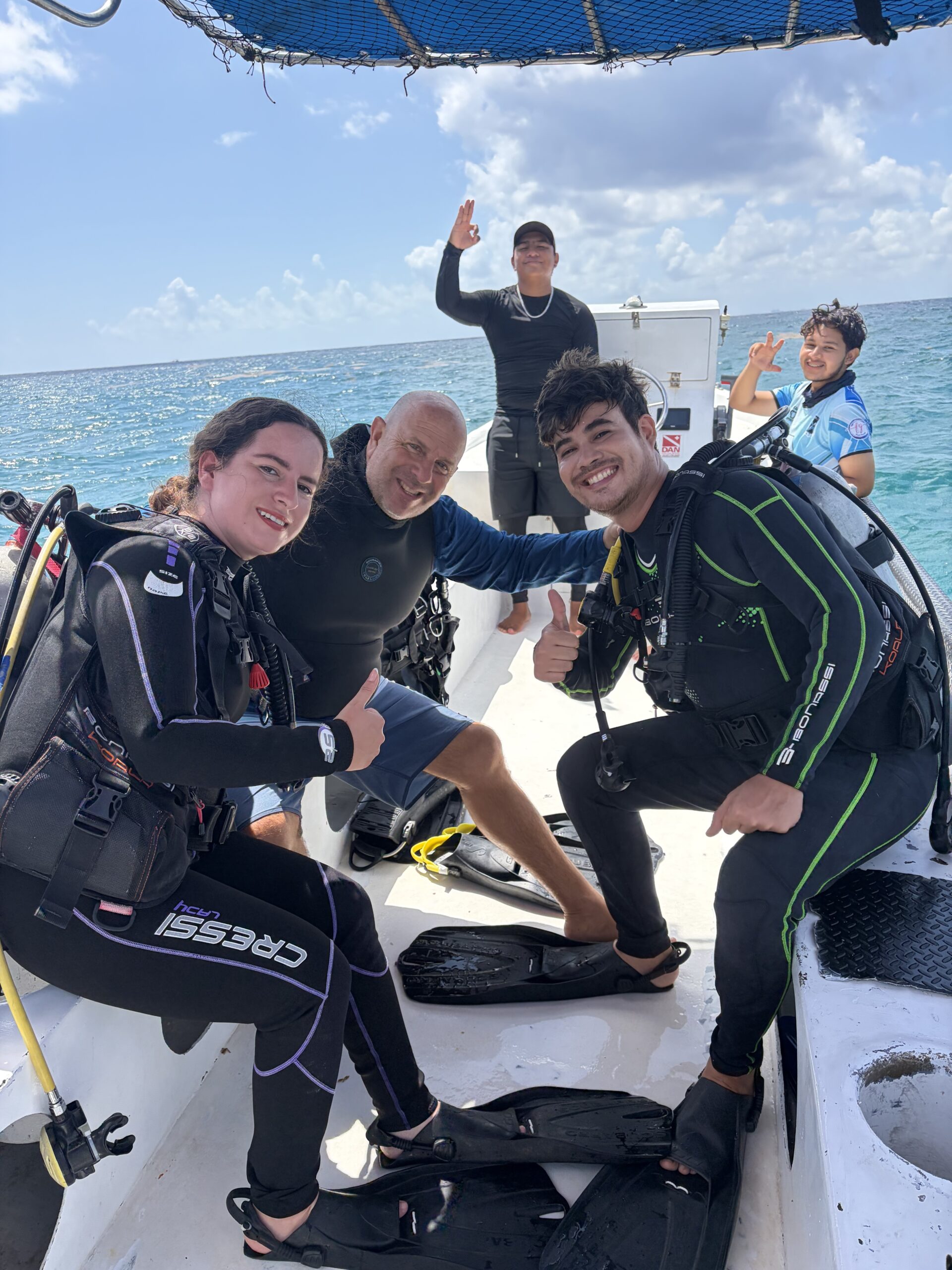
On ocean dives like this one, we cap groups at a maximum of 4 divers per guide, and at a site like the Devil’s Throat, that number isn’t a marketing gimmick — a large group simply can’t fit through the tunnels safely, or without wrecking visibility for everyone. With fewer divers, the guide can watch each person closely before they enter a passage, correct buoyancy issues in real time, and decide on the spot whether someone should swim around a tunnel instead of through it. In my more than three decades of experience, that close attention is the difference between a dive people remember fondly and one that turns stressful because of poor group management.
Certification and experience needed before diving here
For the Devil’s Throat dive, we ask for at least Advanced Open Water certification, or demonstrable experience with depth and current management. This isn’t a bureaucratic box to check — it’s a genuine safety issue, since the combination of depth, enclosed spaces, and current requires that a diver’s fundamentals already be second nature, not something they’re still consciously thinking through. If it’s been a while since your last dive, we’re happy to arrange a check-out dive at a less demanding site first, or even help you earn your Advanced Open Water certification in Playa del Carmen before your trip to Cozumel. Full diving equipment is included with the service, so all you need to bring is yourself, ready both physically and mentally for the challenge.
How we get you from Playa del Carmen to Cozumel
You can stay based in Playa del Carmen without missing out on this site — we coordinate the full trip out to Cozumel on our private boat, with a certified guide, two tanks the same day, marine park fees, and complete gear all included, exactly as we lay out in our definitive guide to diving Cozumel from Playa del Carmen. There’s also the option of crossing on your own by ferry and meeting us on the island, though for exact ferry schedules and pricing, it’s best to confirm directly through WhatsApp before your trip. Either route lets you dive the Devil’s Throat in the morning and still make it back in time to enjoy the rest of your day in Playa del Carmen without any logistical headaches.
FAQ about the Devil’s Throat dive
Do I need advanced certification for the Devil’s Throat dive in Cozumel?
Yes, we recommend Advanced Open Water certification or equivalent experience with depth and current management, since Cozumel’s Devil’s Throat sits around 40 meters deep and requires swimming through enclosed tunnels under variable current conditions. We assess your recent diving experience before confirming the site, and if needed, we’ll arrange a warm-up dive beforehand.
How long does the Devil’s Throat dive last?
Given the site’s depth, bottom time tends to run shorter than on a shallow reef — generally between 20 and 30 minutes, depending on air consumption and dive table limits. Afterward, we do a second, shallower dive at another point in the Palancar system, as part of the same day of diving in Cozumel.
Is it safe to dive inside the Devil’s Throat tunnels?
It’s safe when done with a certified guide, small groups, and divers with the right level of experience — which is exactly how we organize it, capping groups at 4 divers per guide for this type of ocean dive. The guide checks each diver’s buoyancy before entering a tunnel and decides on the spot whether someone should go around a passage instead of through it.
Can I do this dive if I’m staying in Playa del Carmen?
Yes, that’s actually the most common way we organize it — we depart from Playa del Carmen on our private boat headed to Cozumel, with full gear included, a certified guide, and two tanks the same day. You don’t need to switch hotels or give up any nights of your itinerary to experience the Devil’s Throat dive.
If you already have the experience and want to dive one of the most technical and memorable sites Cozumel has to offer, message us on WhatsApp and we’ll figure out together whether the Devil’s Throat is the right dive for your next trip.
Email: booking@deepmexico.com
WhatsApp: message us on WhatsApp
Need help choosing the right dive outing?
Message us and we will help you compare options, logistics and budget based on your level and your trip.